Posts

Parts of a Dagger: Understanding the Anatomy of a Classic Blade

Image
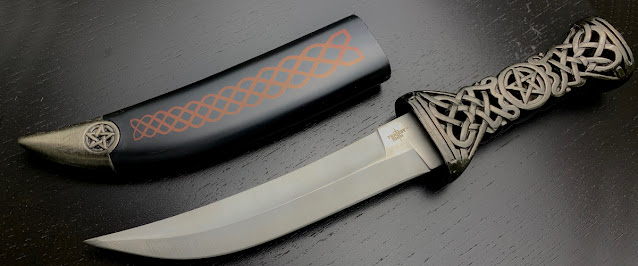
  The parts of a dagger are more than just individual components that make up a blade. Each section has a specific purpose that contributes to the dagger’s balance, appearance, handling, and overall design. Whether you are interested in historical weapons, craftsmanship, collecting, or simply learning about traditional blade anatomy, understanding the parts of a dagger provides valuable insight into how these iconic tools were created and used throughout history. Daggers have existed for thousands of years and have appeared in countless cultures around the world. While styles and shapes vary significantly, many daggers share a common structure. By exploring the parts of a dagger, it becomes easier to appreciate the skill and attention to detail involved in their design. The Blade: The Heart of the Dagger Among all the parts of a dagger, the blade is undoubtedly the most recognizable. The blade is the elongated metal section that extends from the handle and defines much of the dagg...
What is The Status of The Bowie Knife Today?

Image
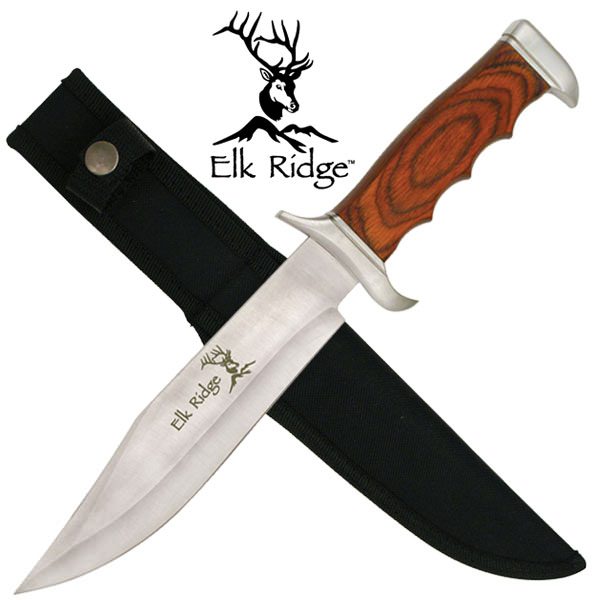
Whether you’re an avid outdoorsman or just someone who likes to be prepared, you’ve probably heard of a bowie   knife . Named after renowned frontiersman Jim Bowie, these knives are known for their large size and durability. It is a type of large knife that was popularized in the early 1800s by American frontier pioneer and folk hero, Jim Bowie.  The original Bowie was designed by blacksmith James Black and was said to be modeled after a French hunting knife that Bowie had owned. The blade is typically long and relatively wide, making it effective for both hunting and self-defense. These knives are also often equipped with a guard and a curved, clip-point blade, which makes them distinctive from other types of knives. Whether you're looking for a functional hunting or survival knife or want to add an iconic piece to your collection, a bowie is a great option. Just be sure to choose a reputable brand and never use your knife for tasks it wasn't designed for - like prying op...

Types of Daggers: Straight, Curved, and Double-Edged Daggers

Image
A dagger (from the Latin word 'dagr' meaning "tooth") is a thin, sharply pointed stabbing weapon that was historically used primarily as a military and naval weapon.  It consists of a single-edged blade with the point facing away from the hilt. The handle, usually wrapped in leather (or wire) for grip, angles down toward this point so that when held by the blade-end "point down" dagger appears to have an upward-curved handle.  The term does not imply that daggers are small knives but rather refers to their sharp stabbing character and design which approaches a spear or spike in overall length though individual examples may vary considerably in size. To put it simply, a dagger consists of two-bladed segments attached at one end by their tangs or handles with the other free from either blade. The free blade curves inward and the straight opposite outside edge forms a sharp point on the back of the hand side for stabbing or thrusting attacks and on the p...

The Amazing Throwing Knives You'll Want to Have!

Image
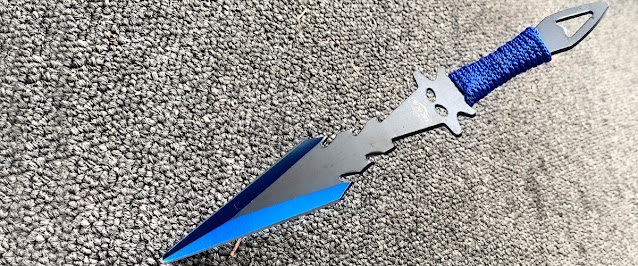
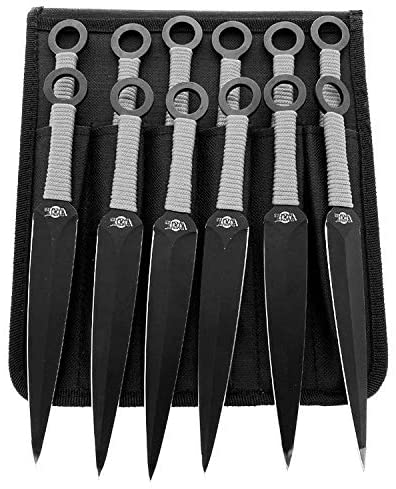
Throwing knives are a popular choice for knife enthusiasts and professional knife throwers. They can be used to add an extreme spin and speed to a throw, which is especially helpful when throwing at specific targets on the ground such as balloons or bottles.  They are also perfect for performing tricks that include not just throwing, but catching as well. With so many uses, it's no wonder that the throwing knife has become a very popular knife for the modern-day knife enthusiast. Throwing Blades are Very Sharp!  They are VERY sharp! These knives are not meant to be used as a tool. They take their name from their use of being thrown as well as used in trick performances or competitions. Because of this, they are not made to be thrown and will break easily if handled improperly.  Because of this danger, you should keep them separated from your other knives or else they can easily cut you if you drop them on the countertop while trying to cut something else with the...

Some Safety Measures to Take While Handling Pocket Knives:

Image
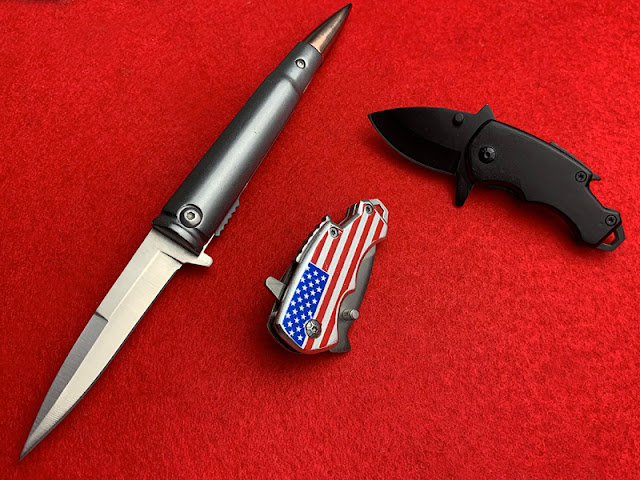
A pocket tool is a folding knife, typically sheathed in a pocket or on a keychain, and intended to be used with one hand. It may also be called a button knife, but this term can also cover other types of knives with folding blades such as switchblades. Early Pocket Blades: The first pocket tool was developed as early as 1835 by James Black of England. The most popular design is the clip-point blade which has its tip shaped in the form of an inverted "V" that rests between two flat transverse ridges.  This design enhances the strength of the point by concentrating it; so despite its size, it is capable of piercing fairly well into most materials including thick leather.  The blade's blade is commonly enclosed in a handle of one or two pieces of hardened steel that are riveted or screwed together. The pocket knives with this design have a shape and function which is shaped by the limitations of the materials used . Pocket Blades in WW 1 The folding knife was po...

Karambit Pocket Knives: Folding VS Fixed Blade Knives

Image
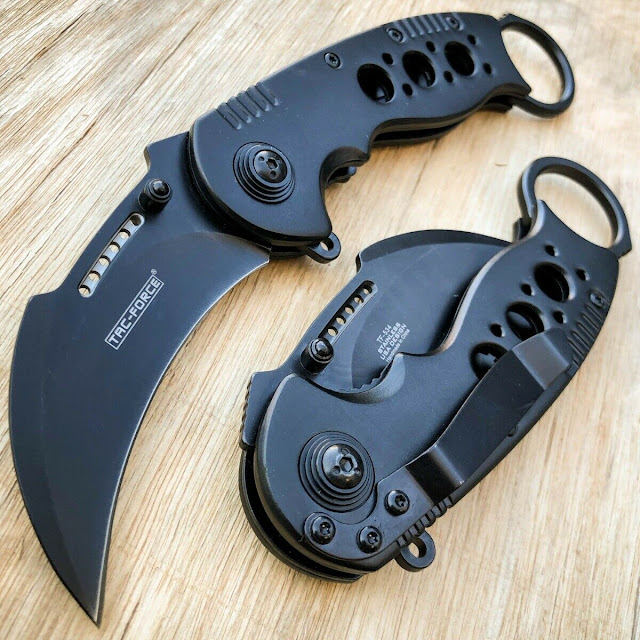
A karambit pocket knife is a type of knife that has a distinctively shaped blade with an inwardly-curving point, akin to the shape of the letter "J". The grip of the knife is created by two outwardly-curved prongs near the hilt. This design makes a karambit easier to use one-handed and more controllable than other knives with normally-shaped blades. Named after its prototype, which was designed by Kwame Karamoko in West Africa, it is popular among martial artists and Western special forces. The karambit has been adopted by the military and police forces of such countries as the United States, Australia, and New Zealand. During the Cold War, Cold Steel marketed a version of the knife that incorporated an injection-molded plastic handle with a gripping surface pad. The company claimed that this design reduced the chance of the knife being damaged in skydiving accidents by lessening stress on the blade edge when dropped from great heights.  However, this "ruggedized...

Spring Assisted Knives Have Some Crazy Facts To Know

Image
  The spring assisted knife dates back to the 1800s. There are two springs mounted on the knife blade, which work when the blade is forced into the plate and are released when the pressure is released.  As a result of this mechanism, objects can be grasped, pushed, or pulled using your thumbs, without requiring you to use your full hand strength. There is a spring in spring assisted knives that hold the blade closed in the mechanism, a very simple design. Similar to forwarding assist in most semi-automatic guns, it also works on a similar principle.  Spring assisted knives  to have springs that allow pistol slides and barrels to close and release so that shots can be fired. Also, muzzle flip and recoil are reduced, so that targets can be acquired more quickly, and bodily injury is reduced when handguns are fired. Springs- The Main Feature Of Spring Assisted Knives Spring assisted knives are knives that open by the force of a spring.  With this mechanis...

You Should Look For These Features In A Throwing Knife

Image
  The throwing knife is an ancient projectile tool that is among the earliest and most common of this category. Because of their power and quickness, martial artists also prefer these weapons. These tools can also help you defend yourself.   Throwing knives must be thrown into targets so that they stick. It takes years of practice to become proficient in using knives, but when you can hit your mark with consistent accuracy without even looking at your target, that is when you have mastered them. What Kinds Of Knives Are Considered Throwing Knives?  Knife throwing cannot be learned until you have a thorough understanding of knife throwing's fundamentals. You can use this knowledge to throw more accurately, safely and aggressively.  Be careful not to display your skills unnecessarily. Always ensure your safety before throwing knives. Be careful not to throw things at other people. If you plan on throwing knives at someone, practice on other surfaces fir...