Posts

Showing posts with the label Kunai Throwing Knives

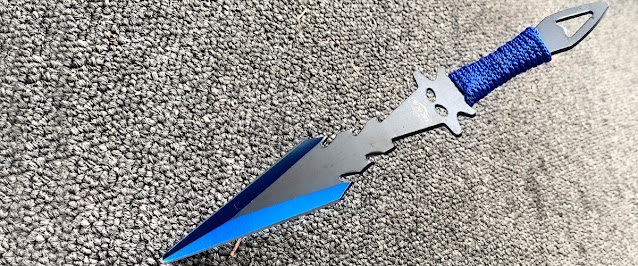
Parts of a Dagger: Understanding the Anatomy of a Classic Blade

Image
  The parts of a dagger are more than just individual components that make up a blade. Each section has a specific purpose that contributes to the dagger’s balance, appearance, handling, and overall design. Whether you are interested in historical weapons, craftsmanship, collecting, or simply learning about traditional blade anatomy, understanding the parts of a dagger provides valuable insight into how these iconic tools were created and used throughout history. Daggers have existed for thousands of years and have appeared in countless cultures around the world. While styles and shapes vary significantly, many daggers share a common structure. By exploring the parts of a dagger, it becomes easier to appreciate the skill and attention to detail involved in their design. The Blade: The Heart of the Dagger Among all the parts of a dagger, the blade is undoubtedly the most recognizable. The blade is the elongated metal section that extends from the handle and defines much of the dagg...

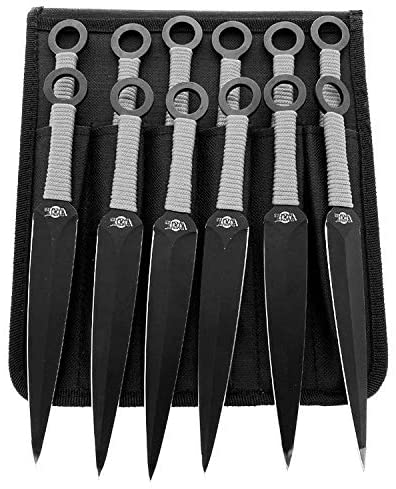
The Amazing Throwing Knives You'll Want to Have!

Image
Throwing knives are a popular choice for knife enthusiasts and professional knife throwers. They can be used to add an extreme spin and speed to a throw, which is especially helpful when throwing at specific targets on the ground such as balloons or bottles.  They are also perfect for performing tricks that include not just throwing, but catching as well. With so many uses, it's no wonder that the throwing knife has become a very popular knife for the modern-day knife enthusiast. Throwing Blades are Very Sharp!  They are VERY sharp! These knives are not meant to be used as a tool. They take their name from their use of being thrown as well as used in trick performances or competitions. Because of this, they are not made to be thrown and will break easily if handled improperly.  Because of this danger, you should keep them separated from your other knives or else they can easily cut you if you drop them on the countertop while trying to cut something else with the...

You Should Look For These Features In A Throwing Knife

Image
  The throwing knife is an ancient projectile tool that is among the earliest and most common of this category. Because of their power and quickness, martial artists also prefer these weapons. These tools can also help you defend yourself.   Throwing knives must be thrown into targets so that they stick. It takes years of practice to become proficient in using knives, but when you can hit your mark with consistent accuracy without even looking at your target, that is when you have mastered them. What Kinds Of Knives Are Considered Throwing Knives?  Knife throwing cannot be learned until you have a thorough understanding of knife throwing's fundamentals. You can use this knowledge to throw more accurately, safely and aggressively.  Be careful not to display your skills unnecessarily. Always ensure your safety before throwing knives. Be careful not to throw things at other people. If you plan on throwing knives at someone, practice on other surfaces fir...

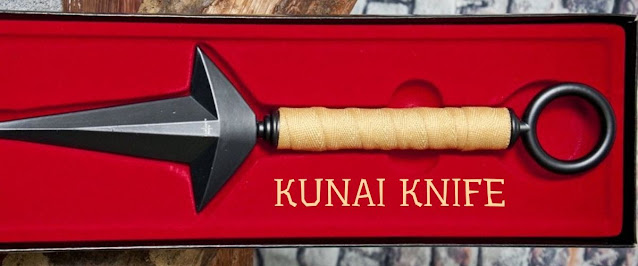
A Brief Description Of The Japanese Kunai Knives

Image
  Kunai are Japanese tools that are similar to trowels used in masonry work. The kunai knife became popular after appearing in the Naruto cartoon. They are typically associated with the historic hero of ninjas, Naruto. The ninjas used a kunai knife to dig holes into the walls. It is quite common to see a kunai used as a basic tool in martial arts, but it is actually a versatile weapon. It can be used for various functions such as digging, climbing, etc. Historic Overview Of Kunai Knives The kunai knife is a traditional Japanese knife that has been employed through time by warriors, farmers, and civilians. It became an important part of the Japanese soldier's equipment during the Sengoku Jidai (Warring States Period) when it was crafted to take down enemies with an oblique slash. However, over time, camouflaged handles were added to arm this knife so it could be carried in foliage without being seen. As craftsmen continued to improve upon its design, the kunai became one of...