A Brief Description Of The Japanese Kunai Knives
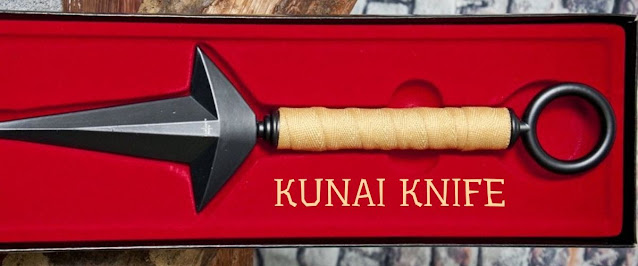
Kunai are Japanese tools that are similar to trowels used in masonry work. The kunai knife became popular after appearing in the Naruto cartoon. They are typically associated with the historic hero of ninjas, Naruto.
The ninjas used a kunai knife to dig holes into the walls. It is quite common to see a kunai used as a basic tool in martial arts, but it is actually a versatile weapon. It can be used for various functions such as digging, climbing, etc.
Historic Overview Of Kunai Knives
The kunai knife is a traditional Japanese knife that has been employed through time by warriors, farmers, and civilians. It became an important part of the Japanese soldier's equipment during the Sengoku Jidai (Warring States Period) when it was crafted to take down enemies with an oblique slash. However, over time, camouflaged handles were added to arm this knife so it could be carried in foliage without being seen. As craftsmen continued to improve upon its design, the kunai became one of the weapons that changed how combat unfolded during World War II.
The kunai is commonly thought to have originated in China. However, it most likely developed in Japan between the 6th and 8th centuries AD. Its name, kunai, is derived from the Chinese term Kongjian (金地矛) meaning "golden spear". The majority of kunai knives discovered in Japan come with carved inscriptions which suggest that they were used by warriors who had fought in China and came back to Japan.
The Design Of Kunai Knives
In terms of its appearance, the kunai knife is a totally different and unique knife as compared to other knives. There is a leaf-shaped blade and handle with a ring at the end and on the pommel for attachment to ropes. Essentially, a circular hole at the end is not just for hanging the tool after work; it has practical purposes as well.
The rope facilitates a good grip
when it is attached to the handle. It can be used for wrapping your body to
conceal it. Sometimes you can also use the rope as a piton or as an anchor.
The blades of these knives are made of soft iron material. The tip of the blade is very sharp and pointed. The sides are not sharp but these edges are useful for smashing some type of soft material such as plaster. Various versions and types of kunai are available today. They are thin, saw-toothed, and wide in some cases.
Uses Of Kunai Knives
The art of using these knives is called koppojutsu and is so difficult to master that you'll have to become a monk for a good 5 years before you can properly use a kunai knife. So next time you watch a ninja movie or read a comic book about them, remember that they were actual people who dedicated their entire lives to being the best at what they do.
Traditionally, the Kunai was used as a gardening tool. Farmer's also used it for this purpose. The kunai was considered exceptionally effective at digging, a job nearly all warriors performed. Masons also used the knife to work the stone.
Yet, this tool was also used in more practical settings such as construction sites and missions where precision was essential. The idea behind these weapons was to give something for missions where you cannot bring your sword or other heavy weapons with you and that help build the target area around yourself so that nobody sees what you're doing until it's too late. The kunai can then be thrown at the walls, trees, or even enemies to prepare the area.
Reasons To Choose Kunai!
What makes the kunai Japanese knife appealing to you? Several reasons stand to explain this, including:
- A versatile tool that has a
variety of applications
- Excellent for outdoor work
- Lightweight and portable
- Self-defense weapon with
excellent flying, stabbing, and thrusting capabilities
- Comparatively inexpensive to knives


Comments
Post a Comment